
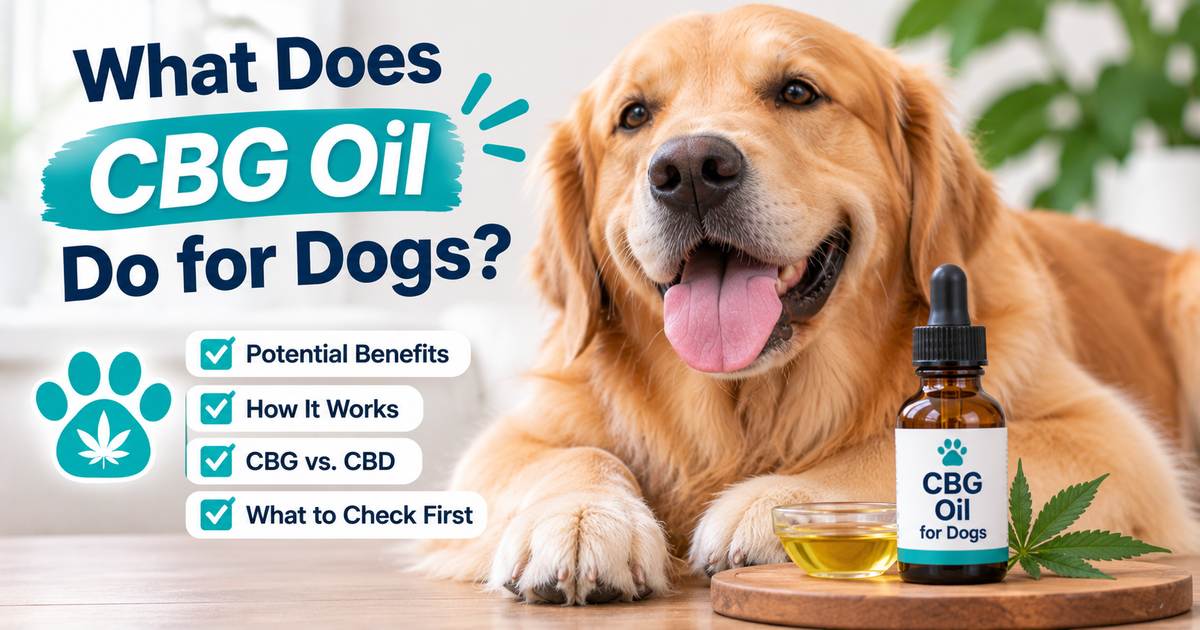
CBG is a cannabinoid found in hemp, and it has started appearing on pet store shelves alongside the CBD products most owners already recognize. The short answer to what it does for dogs is that nobody can say with much confidence yet. CBD in dogs has been studied in a handful of small trials. CBG has barely been studied in dogs at all, and most of what gets repeated about it comes from laboratory work or from research in other species. That does not mean it does nothing. It means the marketing is well ahead of the evidence, and an owner deciding whether to try it deserves to know that before spending money on it.
What CBG Actually Is
CBG stands for cannabigerol, one of more than a hundred cannabinoids the hemp plant produces.
Its usual description is that it is the parent compound. Early in the plant’s growth, CBG acid is the precursor that converts into the acids behind CBD and THC as the plant matures. By harvest, very little CBG is left, which is why it has historically been expensive and uncommon compared with CBD.
Like CBD, CBG is not intoxicating. The compound responsible for a high is THC, and hemp products sold legally contain only trace amounts of it. A dog given a properly made CBG product is not getting high, which is the first thing most owners want to know.
Where CBG differs from CBD is in how it interacts with the body. The two appear to act on different receptors, which is the basis for the claim that they do different things. That claim is plausible in principle. It is not the same as being demonstrated in dogs.
What Owners Use It For
Walk through the reasons owners give and they cluster into a short list.
The common ones:
- Anxiety, particularly around storms, fireworks and being left alone
- Joint stiffness and general comfort in older dogs
- Appetite in dogs that have gone off their food
- Skin irritation and itching
- Digestive upset
- General wellbeing in senior dogs, without a specific complaint
These are the same reasons owners reach for CBD, which is worth noticing. In practice most people trying CBG are trying it because CBD either helped and they want something similar, or did not help and they want an alternative.
It is also worth separating the reasons. Anxiety and joint comfort are long running issues where owners are often looking for anything that might help. Appetite and digestion are usually acute, and an acute change in either is a reason to see a vet rather than to try a supplement.
What the Evidence Actually Shows
Here is where honesty serves owners better than enthusiasm.
Research on cannabinoids in dogs has focused almost entirely on CBD, and even there the body of work is small. A few controlled studies have looked at CBD for osteoarthritis pain and for seizures, with results that were promising enough to justify more research and limited enough that no one is calling it settled.
CBG has received far less attention. Most claims about it trace back to cell culture work or to studies in rodents, neither of which reliably predicts what happens in a dog. There is no body of clinical evidence in dogs comparable even to the modest one behind CBD.
What this means practically: if a product page tells you confidently what CBG does for dogs, that confidence is not coming from research in dogs. It may still work. It has not been shown to.
Safety and What to Watch For
Cannabinoids are generally well tolerated in dogs at reasonable doses, with the caveats that matter here.
Reported effects in studies and in practice include drowsiness, dry mouth leading to more drinking, loose stool, and changes in liver enzyme readings on bloodwork. That last one is the reason vets often want to recheck bloodwork in dogs taking cannabinoids regularly, particularly older dogs or dogs already on medication.
Drug interactions are the bigger concern. Cannabinoids are processed by the same liver pathways that handle a range of common veterinary medications, which means they can change how those drugs behave in the body. A dog on anti-seizure medication, pain medication, anti-inflammatories or heart medication should not start a cannabinoid product without the vet who prescribed those drugs knowing about it.
One hard rule regardless of product: human cannabis products, edibles and anything containing meaningful THC are dangerous to dogs. THC toxicity is a genuine veterinary emergency and a common one.
How to Judge a Product
The pet supplement market is lightly regulated, and independent testing has repeatedly found products whose contents do not match their labels.
What to look for before buying:
- A certificate of analysis from an independent laboratory, available for the batch you are buying
- Cannabinoid content stated in milligrams, not as a vague percentage or a strength name
- Testing for pesticides, heavy metals and solvents, not just cannabinoid content
- A product made for dogs, with no xylitol, essential oils or added flavorings that are unsafe for pets
- Clear dosing information by weight
- A manufacturer that answers questions about sourcing
No certificate of analysis is the clearest reason to put a product back. It is the only way to know what is in the bottle, and reputable makers publish it without being asked.
If you would rather talk it through with someone before buying, the staff at our Pet Store in Miami can walk you through what is on the shelf and what the labels actually tell you.
CBG and CBD Together
Many products on the shelf contain both, which can be confusing when you are trying to work out what did what.
Full spectrum products contain the range of cannabinoids present in the plant, including trace THC within legal limits. Broad spectrum products contain multiple cannabinoids with THC removed. Isolate products contain one cannabinoid alone.
The argument for combined products is that cannabinoids may work better together than separately, an idea usually called the entourage effect. It is a reasonable hypothesis and it is not well established in dogs.
The practical downside of a combination product is that you cannot tell which ingredient is responsible for any change you see, or for any side effect. If you are trying something for a specific reason, a single ingredient product makes the result easier to interpret.
Talking to Your Vet First
This is the step owners most often skip, usually because they expect to be talked out of it.
Most vets these days are willing to have the conversation, even where their ability to recommend specific products is restricted. What they can do is tell you whether your dog’s medications interact, whether the symptom you are treating needs investigating rather than managing, what to monitor, and whether bloodwork is worth rechecking.
That middle point matters most. Anxiety that is getting worse, stiffness that appeared suddenly, itching that will not settle and appetite loss all have causes worth identifying. A supplement that takes the edge off a symptom while the cause goes unexamined is not a good outcome, and itching in particular is more often a skin or allergy problem than anything a supplement will fix.
Where This Leaves You
CBG is not a scam and it is not a proven treatment. It is an early stage product with a plausible mechanism, almost no evidence in dogs, and a lot of confident marketing attached to it.
If you want to try it, the sensible version is to clear it with your vet, buy something with a current certificate of analysis, start low, change one thing at a time, and watch your dog rather than your expectations. If nothing changes after a few weeks, that is useful information too.
Our shelves carry supplements alongside the rest of what we stock, and if you are in the salon anyway for an appointment at our Pet Groomer Miami location at 275 NE 18th St in Edgewater, you are welcome to come look through what is there and ask. Appointments and questions on (786) 409-2885 or through the booking page.
Frequently Asked Questions
Is CBG the same as CBD?
No. Both are cannabinoids from hemp and neither is intoxicating, but they are different compounds that appear to act on different receptors in the body. CBG is the precursor compound that converts into others as the plant matures, which is why it is present in small amounts at harvest and tends to cost more.
Will CBG oil make my dog high?
No. THC is the compound responsible for intoxication, and legal hemp products contain only trace amounts. The real risk is human cannabis products and edibles, which contain enough THC to cause serious toxicity in dogs and are a common veterinary emergency. Keep those well out of reach.
What are the side effects of CBG for dogs?
Reported effects for cannabinoids generally include drowsiness, increased thirst, loose stool and changes in liver enzyme readings on bloodwork. The more significant concern is interaction with medications processed by the same liver pathways, which is why any dog on prescribed medication needs vet input before starting.
How do I know if a CBG product for dogs is any good?
Look for a certificate of analysis from an independent laboratory covering the batch you are buying, cannabinoid content stated in milligrams, and testing for pesticides, heavy metals and solvents. The product should be made for dogs, with dosing by weight and no xylitol or added oils. No certificate means no way to verify the contents.
Leave A comment