
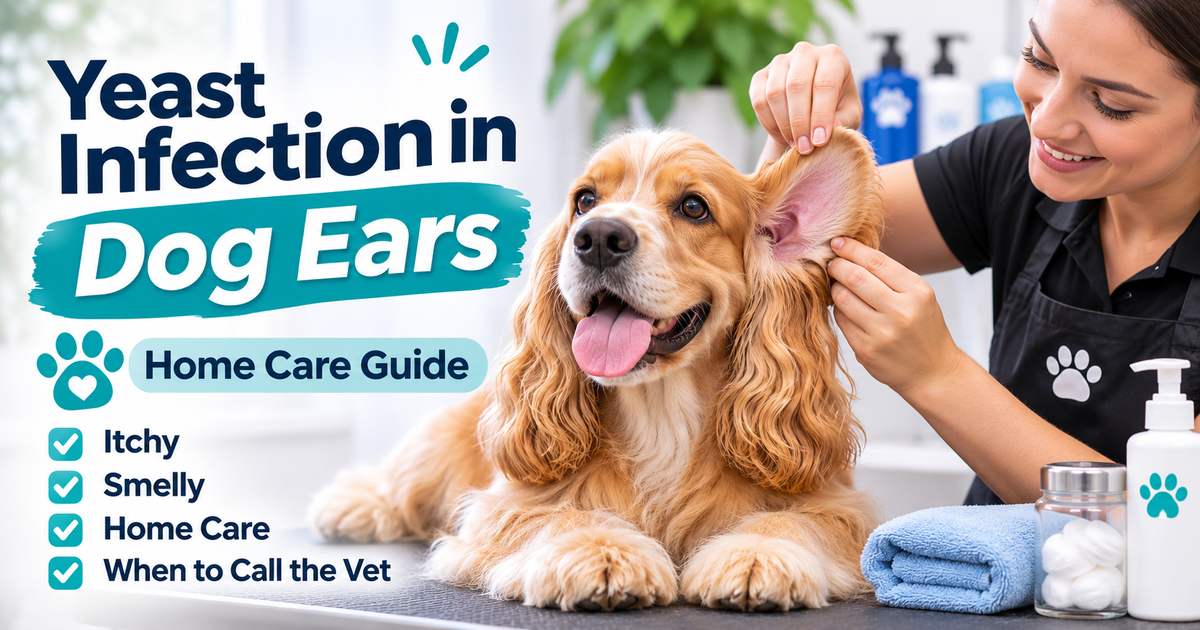
A yeast infection in a dog’s ears usually announces itself before you see anything. The smell is distinctive, often described as sweet or musty, and it tends to arrive alongside head shaking, scratching at one ear, or a dog that pulls away when you touch the side of their head. Yeast lives on healthy skin in small numbers. It becomes a problem when the ear canal turns warm, damp and dark enough for it to multiply, which is a fair description of a floppy ear in Miami most of the year. Here is what causes it, what you can reasonably do at home, and the point at which home care stops being the right answer.
Start Here: This Needs a Vet Diagnosis First
This matters more than anything else on this page, so it goes first rather than in a disclaimer at the bottom.
Ear infections in dogs come from yeast, from bacteria, from ear mites, or from a combination. They look similar from the outside and they smell similar, but they need different treatment. Guessing wrong wastes time while the infection gets worse, and the wrong product can make things worse rather than slower.
A vet confirms which it is by looking at a swab under a microscope, which takes minutes. They also check whether the eardrum is intact, which decides what is safe to put in the ear at all. Nothing below is a substitute for that, and no home remedy should go into an ear that has not been checked, particularly a first infection or one that is clearly painful.
What home care is genuinely good for is prevention, maintenance between vet visits, and keeping a mild recurrence from becoming a serious one.
What Causes Yeast Infections in Dogs’ Ears
Yeast does not arrive from outside. It is already there, living on the skin in small numbers, and something changes the conditions enough to let it multiply.
The common triggers:
- Moisture that stays in the ear canal after swimming, bathing or rain
- Humidity, which keeps the canal damp without any water involved
- Ear shape, since a floppy ear covers the canal and limits airflow
- Hair growing in or around the canal, which traps moisture and debris
- Allergies, which are the single most common underlying cause of recurring ear problems
- Wax buildup, which gives yeast something to feed on
- Over-cleaning, which strips the ear’s natural defenses and irritates the lining
Allergies deserve emphasis. A dog with one ear infection has an ear problem. A dog with ear infections several times a year usually has an allergy problem showing up in the ears, and treating the ear each time without addressing the cause means doing it again in three months.
Climate matters too. In a place where the air is humid year round and dogs swim year round, ears stay damp in a way they simply do not in a drier climate. Miami dogs with floppy ears need checking more often than the general advice suggests.
What Yeasty Ears Look and Smell Like
Catching it early is mostly a matter of knowing what you are looking at.
Signs that point to yeast specifically:
- A sweet or musty smell, noticeable from a short distance
- Brown or dark waxy discharge, rather than dry crumbly debris
- Redness inside the ear flap and around the canal opening
- Head shaking, or tilting the head to one side
- Scratching at the ear, or rubbing that side of the head along furniture
- Pulling away when the ear is touched
- Greasy or damp looking fur around the ear
Dry, dark, crumbly debris that looks like coffee grounds points more toward mites than yeast, especially in a young dog. A strong foul smell with yellow or green discharge points more toward bacteria. Both need a vet rather than home care.
One easy early check: lift the ear and smell it once a week. The smell changes before the dog starts scratching, which gives you a head start.
What Home Care Actually Helps
For a mild, confirmed case, or for keeping an ear healthy after treatment, the useful home care is unglamorous.
Use a cleaner made for dogs’ ears. Veterinary ear cleaners are formulated to the right pH, dry the canal as they work, and are safe for the lining. Your vet will usually recommend a specific one, and that recommendation is worth following over anything on a shelf, because cleaners vary and some are wrong for a damaged eardrum.
Clean properly rather than thoroughly:
- Fill the canal with cleaner, rather than wiping only what you can see
- Massage the base of the ear for a few seconds so the cleaner reaches down
- Let the dog shake, which brings debris up out of the canal
- Wipe the visible parts of the ear and the flap with a cotton pad
- Stop there, and do not push anything into the canal
Then keep the ear dry. Dry the ears after every bath and every swim, keep the hair around the ear opening clear, and check the ears weekly rather than waiting for symptoms. Regular dog ear cleaning in Miami as part of a grooming appointment covers the parts that are hard to manage at home, particularly on a dog that objects to having its ears handled.
How often to clean is worth asking your vet, because the answer varies by dog and because over-cleaning causes its own problems. More is not better here.
Home Remedies to Avoid
Search results for this are full of kitchen remedies, and several of them do real harm.
Vinegar and water is the most widely repeated. Diluted vinegar stings badly on skin that is already inflamed, and if the eardrum is damaged, which you cannot see, it reaches places it should never reach. Hydrogen peroxide damages the lining of the ear canal and leaves moisture behind, which is the opposite of what a yeasty ear needs. Rubbing alcohol is painful on raw skin. Coconut oil and other oils keep the canal damp, which is exactly the condition yeast wants. Cotton swabs push debris further down and can perforate the eardrum.
The general rule covers all of them: nothing goes into a dog’s ear that was not made for a dog’s ear, and nothing goes in at all until a vet has confirmed the eardrum is intact.
What About Food?
This question comes up constantly, and the honest answer is more limited than most articles suggest.
There is a widespread claim that carbohydrates and sugars feed yeast in the ears. The connection is not as direct as it sounds, because the yeast in an ear canal is feeding on skin oils and debris rather than on what the dog ate.
Where food genuinely matters is allergies. Food allergies are one driver of the skin inflammation that leads to recurring ear infections, so for a dog that keeps getting them, an elimination diet supervised by a vet can identify a trigger. That is a different and more useful intervention than cutting carbohydrates on the strength of a blog post.
If your dog gets ear infections repeatedly, the conversation to have with your vet is about allergies in general, covering food, environmental triggers and fleas, rather than about any single ingredient.
Preventing the Next One
For dogs that are prone to this, prevention is routine rather than treatment.
What works:
- Dry the ears after every bath and swim, properly rather than quickly
- Check and smell the ears weekly
- Keep hair around the ear opening trimmed so air can circulate
- Keep up whatever allergy management your vet has recommended
- Clean on the schedule your vet set, not more often
- Deal with early signs rather than waiting to see whether they pass
Grooming has a quiet role in all of this. A groomer sees inside the ears every appointment, in good light, and is often the first to notice a change in smell or color. Keeping a regular schedule at a Dog Groomer Miami salon means ears get checked and dried properly every few weeks whether or not anything seems wrong.
When to Stop Home Care and Call the Vet
Some situations need a vet now rather than after a week of cleaning.
Book an appointment if your dog is in obvious pain, if the ear is swollen or hot, if there is yellow, green or bloody discharge, if the dog is tilting their head persistently, if there is any loss of balance, if symptoms are not improving after a few days of care, or if this keeps happening.
Head tilt and balance problems in particular should not wait. An infection that has moved deeper into the ear can affect balance and hearing, and that is well past the point where cleaning helps.
The recurring case is worth repeating too. Three infections a year is not bad luck, it is a pattern, and the pattern usually has a cause that is treatable once identified.
Keeping Ears Clear in Miami
Ear problems are one of the most common reasons dogs end up uncomfortable without their owners realizing, partly because the early signs are easy to miss and partly because dogs tolerate a surprising amount before they complain. Weekly checks and dry ears prevent most of it.
If you would like your dog’s ears cleaned and checked as part of a regular groom, Barky Lounge is at 275 NE 18th St in Edgewater, Miami, and appointments can be made on (786) 409-2885 or through the booking page. For anything that looks like an active infection, see your vet first.
Frequently Asked Questions
What causes yeast infections in dogs’ ears?
Yeast already lives on the skin, and multiplies when the ear canal becomes warm, dark and damp. Moisture from swimming or bathing, humidity, floppy ear shape, hair in the canal and wax buildup all contribute. Allergies are the most common underlying cause when infections keep returning.
Can I treat a dog ear yeast infection at home?
Only after a vet has confirmed it is yeast and that the eardrum is intact, since bacterial infections and mites look similar and need different treatment. Home care means cleaning with a veterinary ear cleaner on the schedule your vet sets, and keeping the ears dry. It is maintenance, not a cure.
Is vinegar or hydrogen peroxide safe for a dog’s ears?
No. Vinegar stings badly on inflamed skin, and hydrogen peroxide damages the lining of the ear canal while leaving moisture behind. If the eardrum is damaged, which you cannot see from outside, either can reach the middle ear. Use only a cleaner made for dogs’ ears.
Do certain foods cause yeast infections in dogs’ ears?
The direct link between carbohydrates and ear yeast is weaker than commonly claimed, since the yeast feeds on skin oils and debris rather than diet. Food matters indirectly through allergies, which drive recurring ear infections. For a repeat sufferer, ask your vet about allergy testing rather than cutting ingredients on your own.
Leave A comment